

Martin Luther: The German monk’s questioning of Catholic dogma led to the Protestant Reformation. He hailed a period of religious freedom, but today it is all but forgotten.
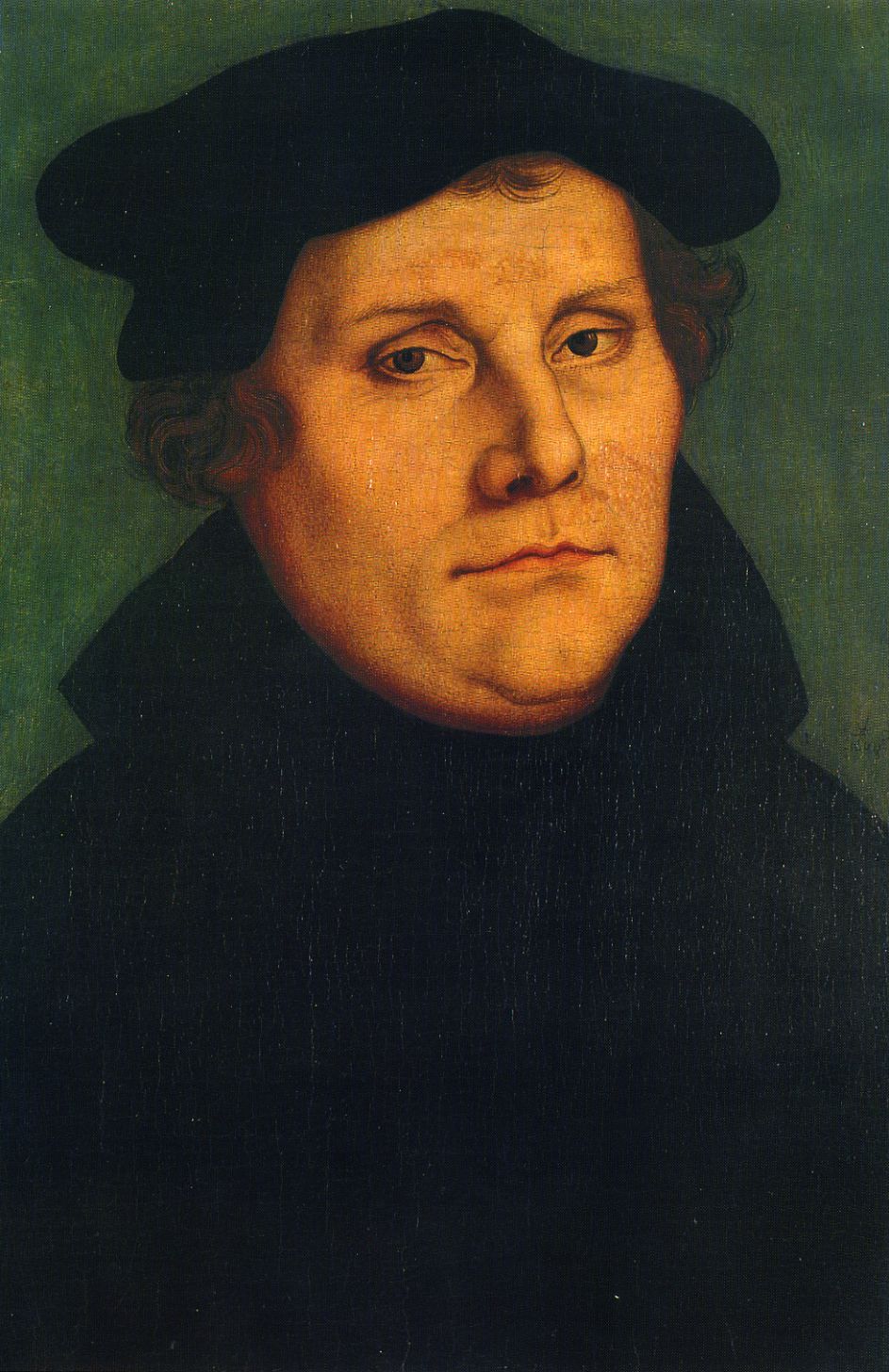
Birth
Martin Luther (November 10, 1483 – February 18, 1546) was a Christian theologian and Augustinian monk whose teachings inspired the Protestant Reformation and deeply influenced the doctrines of Protestant and other Christian traditions. Martin Luther was born to Hans and Margaretha Luder on 10 November 1483 in Eisleben, Germany and was baptised the next day on the feast of St. Martin of Tours, after whom he was named. Luther’s call to the Church to return to the teachings of the Bible resulted in the formation of new traditions within Christianity and the Counter-Reformation in the Roman Catholic Church, culminating at the Council of Trent.
Early Life
Martin Luther (1483–1546) was born in Eisleben, Saxony (now Germany), part of the Holy Roman Empire, to parents Hans and Margaretta. Luther’s father was a prosperous businessman, and when Luther was young, his father moved the family of 10 to Mansfeld. At age five, Luther began his education at a local school where he learned reading, writing and Latin. At 13, Luther began to attend a school run by the Brethren of the Common Life in Magdeburg. The Brethren’s teachings focused on personal piety, and while there Luther developed an early interest in monastic life.
Martin Luther Enters the Monastery
But Hans Luther had other plans for young Martin—he wanted him to become a lawyer—so he withdrew him from the school in Magdeburg and sent him to new school in Eisenach. Then, in 1501, Luther enrolled at the University of Erfurt, the premiere university in Germany at the time. There, he studied the typical curriculum of the day: arithmetic, astronomy, geometry and philosophy and he attained a Master’s degree from the school in 1505. In July of that year, Luther got caught in a violent thunderstorm, in which a bolt of lightning nearly struck him down. He considered the incident a sign from God and vowed to become a monk if he survived the storm. The storm subsided, Luther emerged unscathed and, true to his promise, Luther turned his back on his study of the law days later on July 17, 1505. Instead, he entered an Augustinian monastery.
Luther began to live the spartan and rigorous life of a monk but did not abandon his studies. Between 1507 and 1510, Luther studied at the University of Erfurt and at a university in Wittenberg. In 1510–1511, he took a break from his education to serve as a representative in Rome for the German Augustinian monasteries. In 1512, Luther received his doctorate and became a professor of biblical studies. Over the next five years Luther’s continuing theological studies would lead him to insights that would have implications for Christian thought for centuries to come.
Luther spent his early years in relative anonymity as a monk and scholar. But in 1517 Luther penned a document attacking the Catholic Church’s corrupt practice of selling “indulgences” to absolve sin. His “95 Theses,” which propounded two central beliefs—that the Bible is the central religious authority and that humans may reach salvation only by their faith and not by their deeds—was to spark the Protestant Reformation. Although these ideas had been advanced before, Martin Luther codified them at a moment in history ripe for religious reformation. The Catholic Church was ever after divided, and the Protestantism that soon emerged was shaped by Luther’s ideas. His writings changed the course of religious and cultural history in the West.
Luther’s struggle to find peace with God
Young Brother Martin fully dedicated himself to monastic life, the effort to do good works to please God and to serve others through prayer for their souls. Yet peace with God escaped him. He devoted himself to fasts, flagellations, long hours in prayer and pilgrimages, and constant confession. The more he tried to do for God, it seemed, the more aware he became of his sinfulness.
Johann von Staupitz, Luther’s superior, concluded the young man needed more work to distract him from pondering himself. He ordered the monk to pursue an academic career. In 1507 Luther was ordained to the priesthood. In 1508 he began teaching theology at the University of Wittenberg. Luther earned his Bachelor’s degree in Biblical Studies on 9 March 1508 and a Bachelor’s degree in the Sentences by Peter Lombard, (the main textbook of theology in the Middle Ages) in 1509. On 19 October 1512, the University of Wittenberg conferred upon Martin Luther the degree of Doctor of Theology.
Martin Luther’s Evangelical Discovery
The demands of study for academic degrees and preparation for delivering lectures drove Martin Luther to study the Scriptures in depth. Luther immersed himself in the teachings of the Scripture and the early church. Slowly, terms like penance and righteousness took on new meaning. The controversy that broke loose with the publication of his 95 Theses placed even more pressure on the reformer to study the Bible. This study convinced him that the Church had lost sight of several central truths. To Luther, the most important of these was the doctrine that brought him peace with God.
With joy, Luther now believed and taught that salvation is a gift of God’s grace, received by faith and trust in God’s promise to forgive sins for the sake of Christ’s death on the cross. This, he believed was God’s work from beginning to end.
Martin Luther Questions the Catholic Church
In early 16th-century Europe, some theologians and scholars were beginning to question the teachings of the Roman Catholic Church. It was also around this time that translations of original texts—namely, the Bible and the writings of the early church philosopher Augustine—became more widely available.
Augustine (340–430) had emphasized the primacy of the Bible rather than Church officials as the ultimate religious authority. He also believed that humans could not reach salvation by their own acts, but that only God could bestow salvation by his divine grace. In the Middle Ages the Catholic Church taught that salvation was possible through “good works,” or works of righteousness, that pleased God. Luther came to share Augustine’s two central beliefs, which would later form the basis of Protestantism.
Meanwhile, the Catholic Church’s practice of granting “indulgences” to provide absolution to sinners became increasingly corrupt.
The Sale of Indulgences was started by Pope Alexander Borgia in the year 1500.
The keys are actually the keys of the SAFE or the STRONG BOX.
This is what sparked the Reformation. The Pope desperately needed money to build St. Peter’s in Rome. Forgiveness of sins was offered for a price —murder, adultery, lying, theft, swearing etc., etc. You could even buy forgiveness for future sins. . . . Salvation was bought and sold like any common marketplace commodity. That the Gift of God could be treated so contemptuously was the last straw for Luther.
Indulgence-selling had been banned in Germany, but the practice continued unabated. In 1517, a friar named Johann Tetzel began to sell indulgences in Germany to raise funds to renovate St. Peter’s Basilica in Rome.
His emphasis on the priesthood of all believers unleashed the masses to pray and expect answers from God. If there had been no Luther, there would have been no Methodist revival, no Great Awakenings.
Justification by faith alone
From 1510 to 1520, Luther lectured on the Psalms, the books of Hebrews, Romans, and Galatians. As he studied these portions of the Bible, he came to view the use of terms such as penance and righteousness by the Catholic Church in new ways. He became convinced that the church was corrupt in its ways and had lost sight of what he saw as several of the central truths of Christianity. The most important for Luther was the doctrine of justification – God’s act of declaring a sinner righteous – by faith alone through God’s grace. He began to teach that salvation or redemption is a gift of God’s grace, attainable only through faith in Jesus as the Messiah.[40] “This one and firm rock, which we call the doctrine of justification,” he wrote, “is the chief article of the whole Christian doctrine, which comprehends the understanding of all godliness.”[41]
Luther came to understand justification as entirely the work of God. This teaching by Luther was clearly expressed in his 1525 publication On the Bondage of the Will, which was written in response to On Free Will by Desiderius Erasmus (1524). Luther based his position on Predestination on St. Paul’s epistle to the Ephesians 2:8–10. Against the teaching of his day that the righteous acts of believers are performed in cooperation with God, Luther wrote that Christians receive such righteousness entirely from outside themselves; that righteousness not only comes from Christ but actually is the righteousness of Christ, imputed to Christians (rather than infused into them) through faith.[42] “That is why faith alone makes someone just and fulfills the law,” he wrote. “Faith is that which brings the Holy Spirit through the merits of Christ.”[43] Faith, for Luther, was a gift from God; the experience of being justified by faith was “as though I had been born again.” His entry into Paradise, no less, was a discovery about “the righteousness of God” – a discovery that “the just person” of whom the Bible speaks (as in Romans 1:17) lives by faith.[44] He explained his concept of “justification” in the Smalcald Articles:
The first and chief article is this: Jesus Christ, our God and Lord, died for our sins and was raised again for our justification (Romans 3:24–25). He alone is the Lamb of God who takes away the sins of the world (John 1:29), and God has laid on Him the iniquity of us all (Isaiah 53:6). All have sinned and are justified freely, without their own works and merits, by His grace, through the redemption that is in Christ Jesus, in His blood (Romans 3:23–25). This is necessary to believe. This cannot be otherwise acquired or grasped by any work, law or merit. Therefore, it is clear and certain that this faith alone justifies us … Nothing of this article can be yielded or surrendered, even though heaven and earth and everything else falls (Mark 13:31).[45]
Luther’s rediscovery of “Christ and His salvation” was the first of two points that became the foundation for the Reformation. His railing against the sale of indulgences was based on it.[46]
The 95 Theses
Committed to the idea that salvation could be reached through faith and by divine grace only, Luther vigorously objected to the corrupt practice of selling indulgences. Acting on this belief, he wrote the “Disputation on the Power and Efficacy of Indulgences,” also known as “The 95 Theses,” a list of questions and propositions for debate. Popular legend has it that on October 31, 1517 Luther defiantly nailed a copy of his 95 Theses to the door of the Wittenberg Castle church. The reality was probably not so dramatic; Luther more likely hung the document on the door of the church matter-of-factly to announce the ensuing academic discussion around it that he was organizing.
The 95 Theses, which would later become the foundation of the Protestant Reformation, were written in a remarkably humble and academic tone, questioning rather than accusing. The overall thrust of the document was nonetheless quite provocative. The first two of the theses contained Luther’s central idea, that God intended believers to seek repentance and that faith alone, and not deeds, would lead to salvation. The other 93 theses, a number of them directly criticizing the practice of indulgences, supported these first two.
In addition to his criticisms of indulgences, Luther also reflected popular sentiment about the “St. Peter’s scandal” in the 95 Theses:
Why does not the pope, whose wealth today is greater than the wealth of the richest Crassus, build the basilica of St. Peter with his own money rather than with the money of poor believers?
The 95 Theses were quickly distributed throughout Germany and then made their way to Rome. In 1518, Luther was summoned to Augsburg, a city in southern Germany, to defend his opinions before an imperial diet (assembly). A debate lasting three days between Luther and Cardinal Thomas Cajetan produced no agreement. Cajetan defended the church’s use of indulgences, but Luther refused to recant and returned to Wittenberg.
Martin Luther’s German Bible
Martin Luther was the first person to translate and publish the Bible in the commonly-spoken dialect of the German people. He used the recent 1516 critical Greek edition of Erasmus, a text which was later called textus receptus. The Luther German New Testament translation was first published in September of 1522. The translation of the Old Testament followed, yielding an entire German language Bible in 1534.
Luther is also know to have befriended William Tyndale, and given him safe haven and assistance in using the same 1516 Erasmus Greek-Latin Parallel New Testament that had been the source text for his German New Testament of 1522, as the trustworthy source text for Tyndale’s English New Testament of 1525-26.
Martin Luther had a small head-start on Tyndale, as Luther declared his intolerance for the Roman Church’s corruption on Halloween in 1517, by nailing his 95 Theses of Contention to the Wittenberg Church door. Luther, who would be exiled in the months following the Diet of Worms Council in 1521. Luther also published a German Pentateuch in 1523, and another edition of the German New Testament in 1529. In the 1530’s he would go on to publish the entire Bible in German.
His translation of the Bible also helped to develop a standard version of the German language and added several principles to the art of translation. Luther’s hymns sparked the development of congregational singing in Christianity. His marriage, on June 13, 1525, to Katharina von Bora, a former nun, began the tradition of clerical marriage within several Christian traditions.
Luther the Heretic
On November 9, 1518 the pope condemned Luther’s writings as conflicting with the teachings of the Church. One year later a series of commissions were convened to examine Luther’s teachings. The first papal commission found them to be heretical, but the second merely stated that Luther’s writings were “scandalous and offensive to pious ears.” Finally, in July 1520 Pope Leo X issued a papal bull (public decree) that concluded that Luther’s propositions were heretical and gave Luther 120 days to recant in Rome. Luther refused to recant, and on January 3, 1521 Pope Leo excommunicated Martin Luther from the Catholic Church.
On April 17, 1521 Luther appeared before the Diet of Worms in Germany. Refusing again to recant, Luther concluded his testimony with the defiant statement: “Here I stand. God help me. I can do no other.” On May 25, the Holy Roman emperor Charles V signed an edict against Luther, ordering his writings to be burned. Luther hid in the town of Eisenach for the next year, where he began work on one of his major life projects, the translation of the New Testament into German, which took him 10 years to complete.
Martin Luther – Later Years
Luther returned to Wittenberg in 1521, where the reform movement initiated by his writings had grown beyond his influence. It was no longer a purely theological cause; it had become political. Other leaders stepped up to lead the reform, and concurrently, the rebellion known as the Peasants’ War was making its way across Germany.
Luther had previously written against the Church’s adherence to clerical celibacy, and in 1525 he married Katherine of Bora, a former nun. They had five children. Although Luther’s early writings had sparked the Reformation, he was hardly involved in it during his later years. At the end of his life, Luther turned strident in his views, and pronounced the pope the Antichrist, advocated for the expulsion of Jews from the empire and condoned polygamy based on the practice of the patriarchs in the Old Testament.
Luther died on February 18, 1546.
So the question is does the Pope still continue with some form of indulgence today?
According to the Vatican’s Sacred Apostolic Penitentiary publication, Pope Francis will be giving “plenary indulgences” — which is a special act that is said to reduce time in purgatory — to his Twitter followers. The Pope typically offers indulgences to those who see him in person, but for the first time this year (2013) , it will extend to virtual visits, too.
The decision was made as the Pope gears up to visit the World Youth Festival in Brazil next week. The Guardian is reporting Catholics will be able to follow the “rites and pious exercises” that the Pope will do in Brazil online.
For social followers who have previously confessed their sins, have been absolved by a priest and have attended mass, they can follow along live through the social networking site and receive that special forgiveness. Users must follow the events live to participate.
You don’t obtain an indulgence like you get a coffee from a vending machine,” Monsignor Claudio Maria Celli, the president of the Pontifical Council for Social Communication, told Sacred Apostolic Penitentiary. “It’s not enough just to watch a Mass online or follow Pope Francis via live streaming on your iPad or by connecting to Pope2You.net.
These are just devices. What really counts is that the Tweet that the Pope will send from Brazil or the photos from World Youth Day produce genuine spiritual fruit in the heart of the person.”
Mmmm… fruit from a tweet?
Source:
http://www.greatsite.com/timeline-english-bible-history/martin-luther.html
https://en.wikipedia.org/wiki/Martin_Luther
http://mashable.com/2013/07/16/pope-forgive-sins-twitter/


